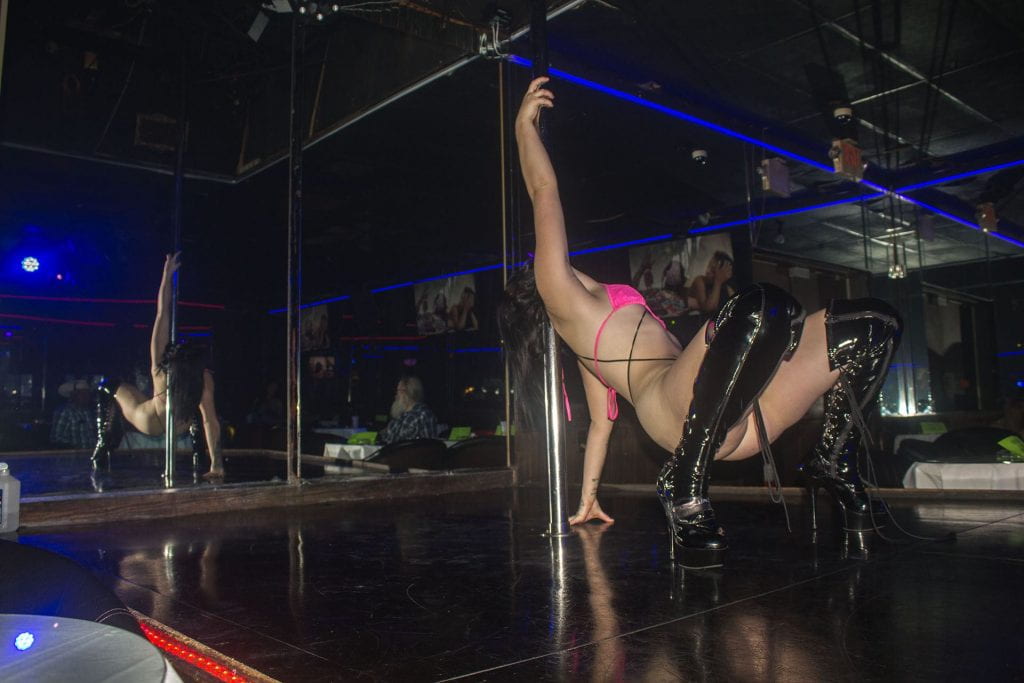
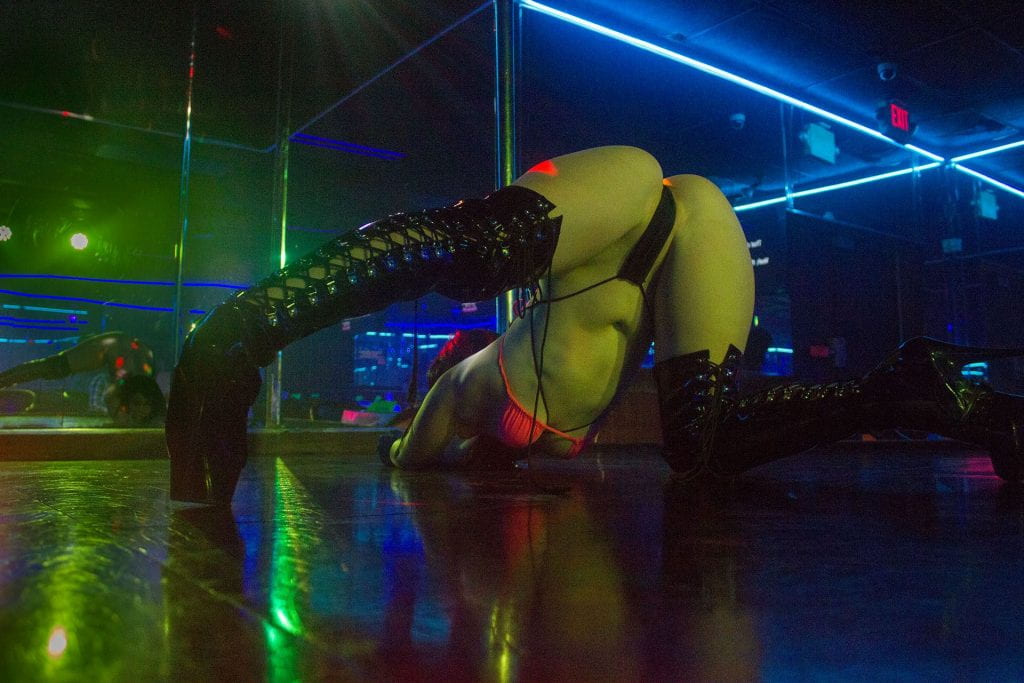
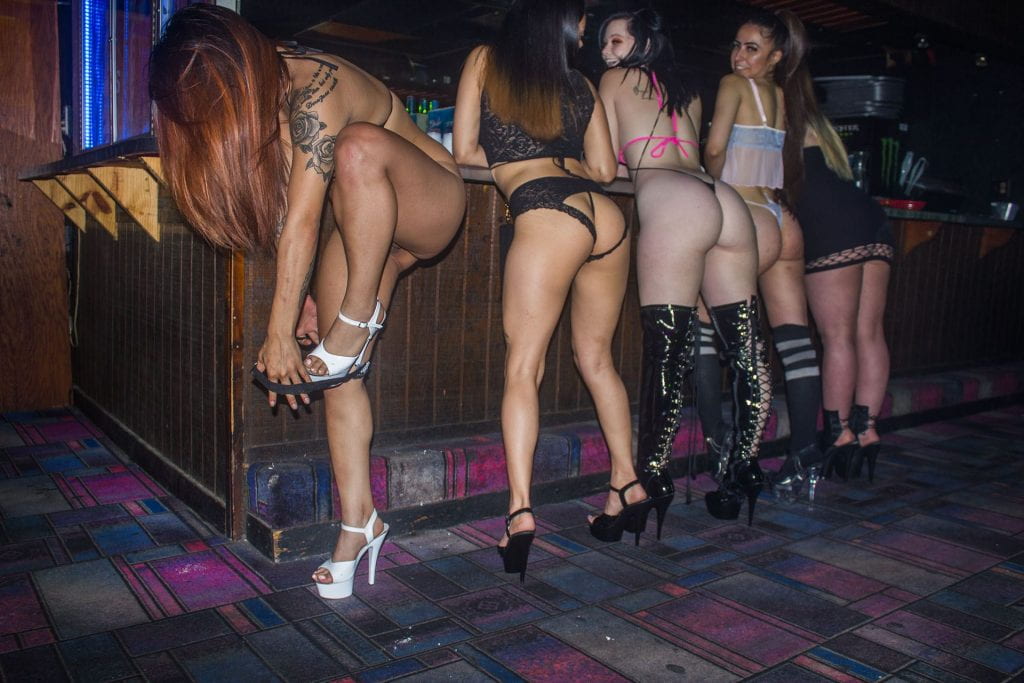
The only insight most people have in the adult entertainment industry is media portrayal and the generalizations created by society. The adult entertainment industry, more specifically strip clubs, function on a multitude of different complex aspects between the employees and customers. Females working in the adult entertainment industry are often dehumanized and resort to keeping their work life in the dark, which is controversial because in reality, the lucrative earnings of this industry open up many avenues of opportunities for dancers to develop as a functioning part of society. For this project, I will be focusing on the strippers and how they interact with the different dynamics of the club that they are employed at. Each dancer in my project has a different background, which reveals important context as to their choice of work and how it has shaped their lives. Some dancers align better with the common stereotype of strippers, while others provide a perspective that shows the ways in which the general nature of stripping has been distorted by society. My goal is to expose different features of the realities of strip clubs in order to create a more human lens through which this industry is seen by the general people.
-
Dinged Up
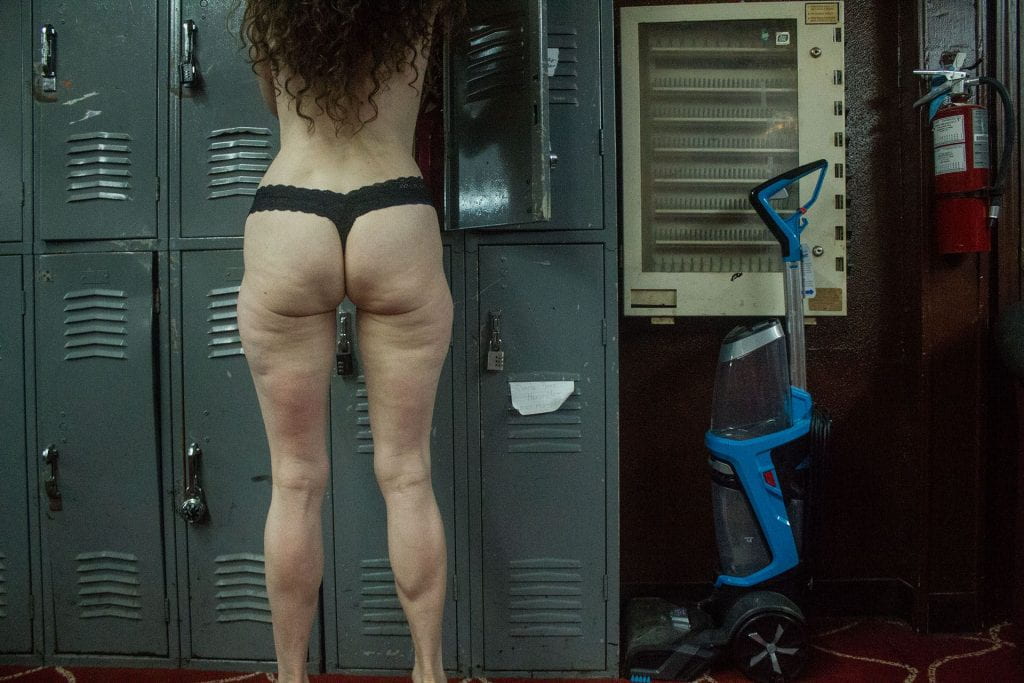
The lockers at Expose have been there since the club first opened in the 1970s. Elena was able to find a locker that was not broken, which is considered to be a rare find. Custodial services are not provided in the locker room, as locker room maintenance is almost always considered to be a loss of revenue for a club, since many dancers do not have respect for the amenities of the locker room.
-
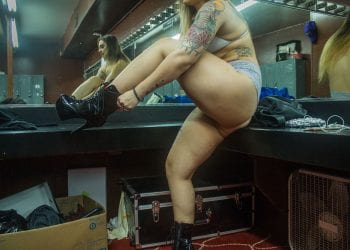
Racing the Clock
Lacey gets ready in a rush to clock in before 2 PM, when the house fee increases by $5. Each dancer has to pay a house fee to the club in order to work a shift, since dancers are considered to be independent contractors that are using the space and clientele of the club. House fees can range from $5 to $60 depending on what time the dancer clocks in; this way, clubs create incentive for girls to come in early. However, earlier hours are generally less profitable than night shift hours, which is why the incremental house fee is necessary to ensure there are dancers working throughout the entire day.
-
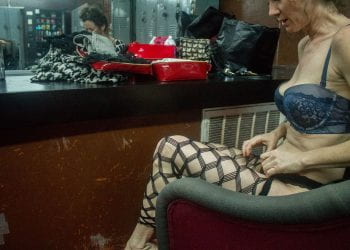
Aging Beauty
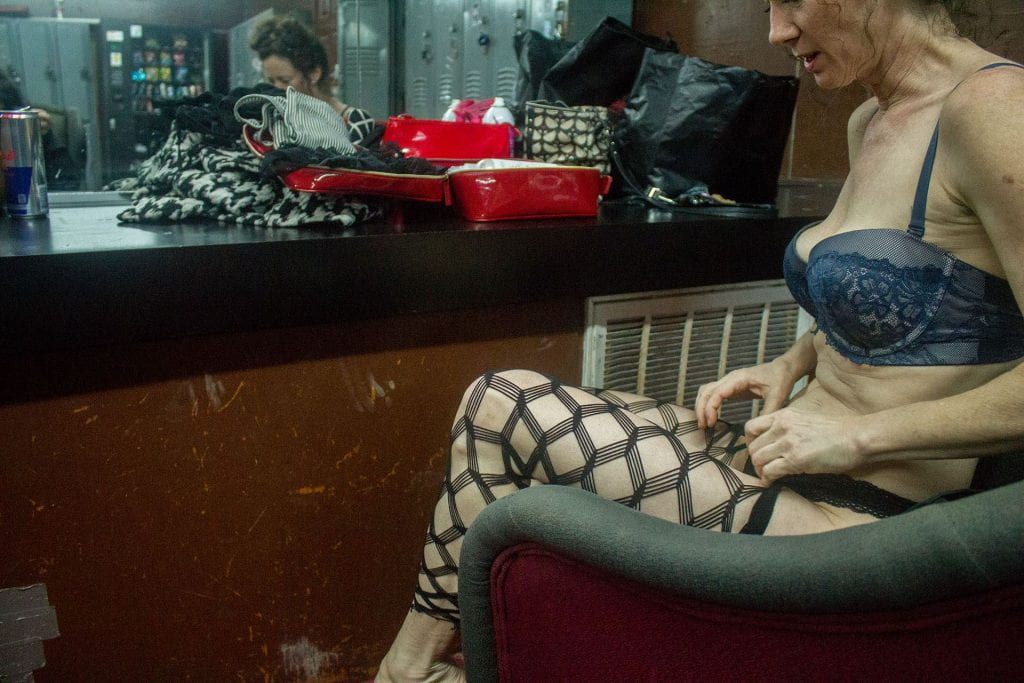
Elena brings herself back into a strip clubs over a decade after she quit dancing. Approaching 42 years old, she is insecure about the way her body looks in lingerie compared to her coworkers, who are in the same age group as her son. She tries new ways to accentuate her body with clothing accessories such as the fishnet leggings she put on for her shift to hide the cellulite on her thighs.
-

Masculine Femininity
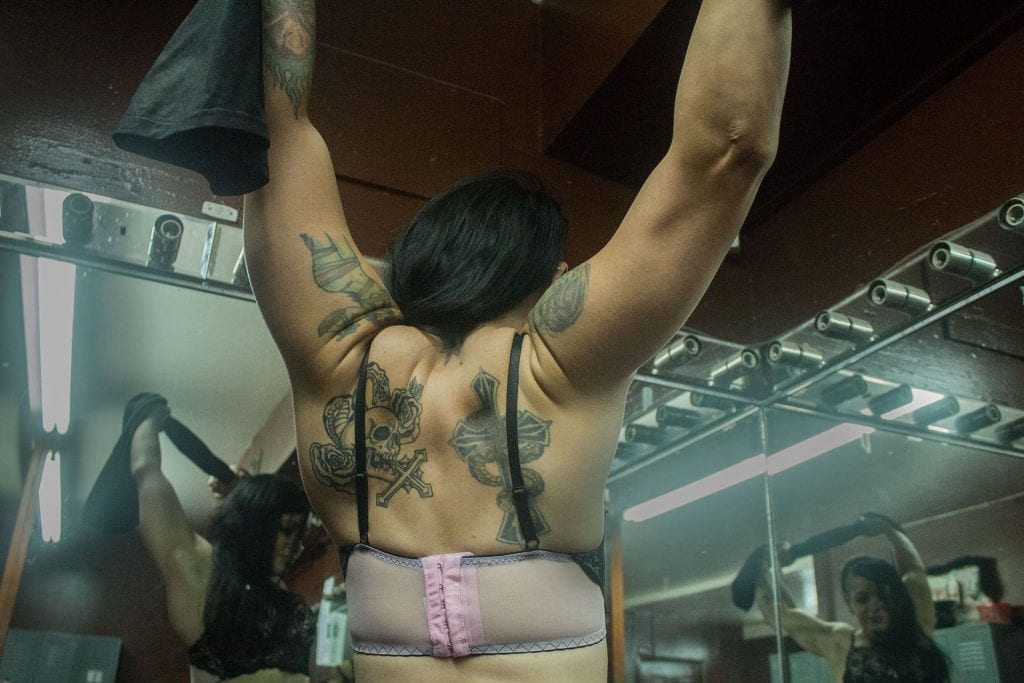
Tara decided to wear her pink lacy corset bra that she got from Goodwill to display the tattoos on her back. Many strip clubs will not hire girls with such visible tattoos, but having meaningful tattoos is a part of the way Tara expresses her body and personality.
-
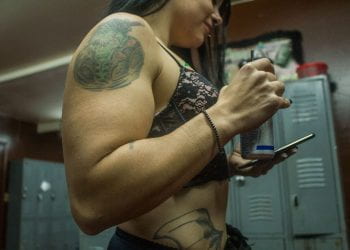
Muscle Machine
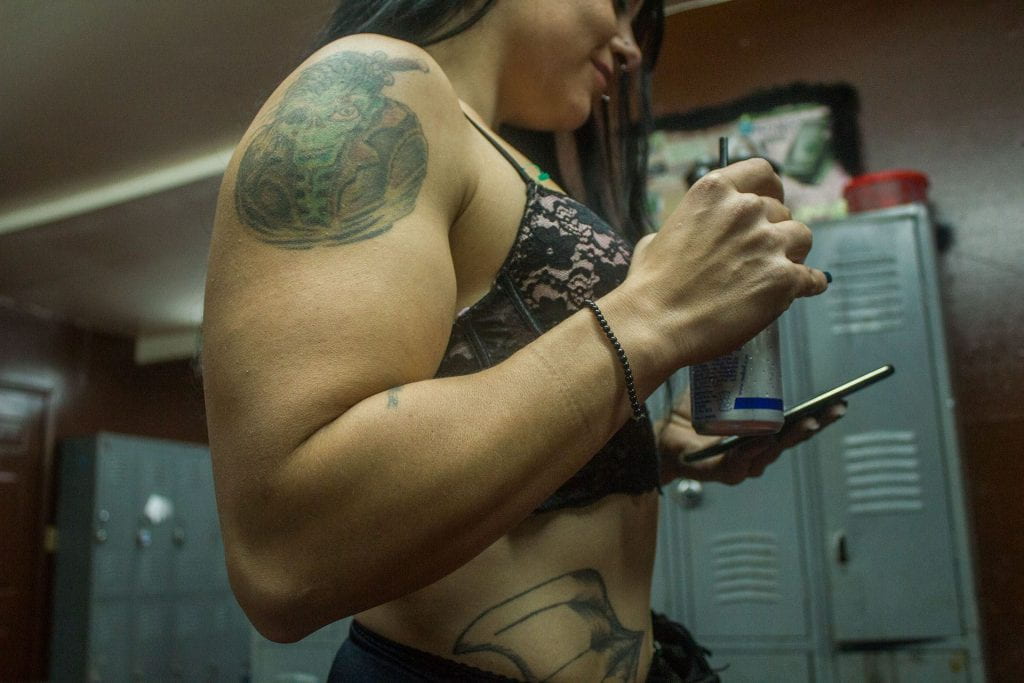
Tara shows off her bicep as she goes on with her daily routine before her day shift. Her shifts at the club double as her work out which is how she keeps herself in good shape. Pole tricks help her earn more money on stage; however, her main form of income comes from the lap dances she tries to sell by talking to customers on the floor. Performing on stage is a way for dancers like Tara to advertise their body and skills with the goal of selling lap dances. Her built muscles act as both a disadvantage and an advantage in her line of work. Many customers are intimidated by her strength, but others are fascinated by the difficult pole tricks she is able to do.
-

Manager's Office
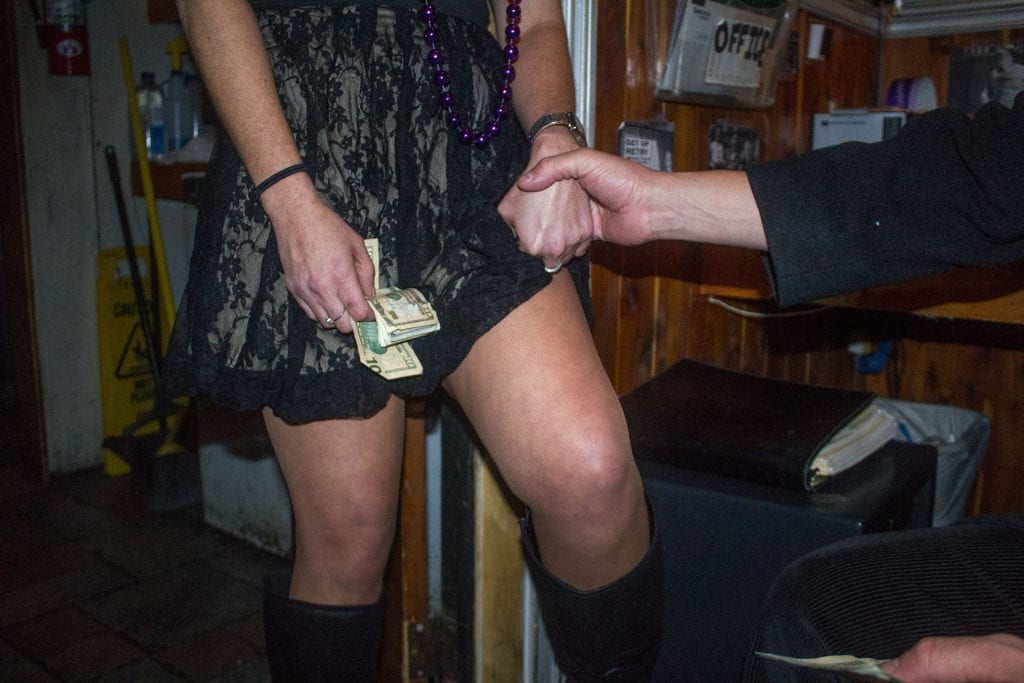
Alicia, a waitress, reports to the manager's office on Mardi Gras to give him the cash she received from a customer who booked a VIP room with a dancer. With the recent slow business, the manager is excited and teasingly tries to put his hand up Alicia's skirt, which she blocks with a closed fist. Although a level of professionalism is expected with the staff, it is difficult to avoid inherently sexual jokes and interactions between the workers of the club.
-

Smoke Break
Danni takes a quick break to smoke weed in the outdoor smoking area just a few hours into her day shift. It helps her relax so she can get through her shift easier and feel more confident while performing. A lot of girls smoke or drink to ease anxiety and stress throughout their shifts.
-

Nicotine
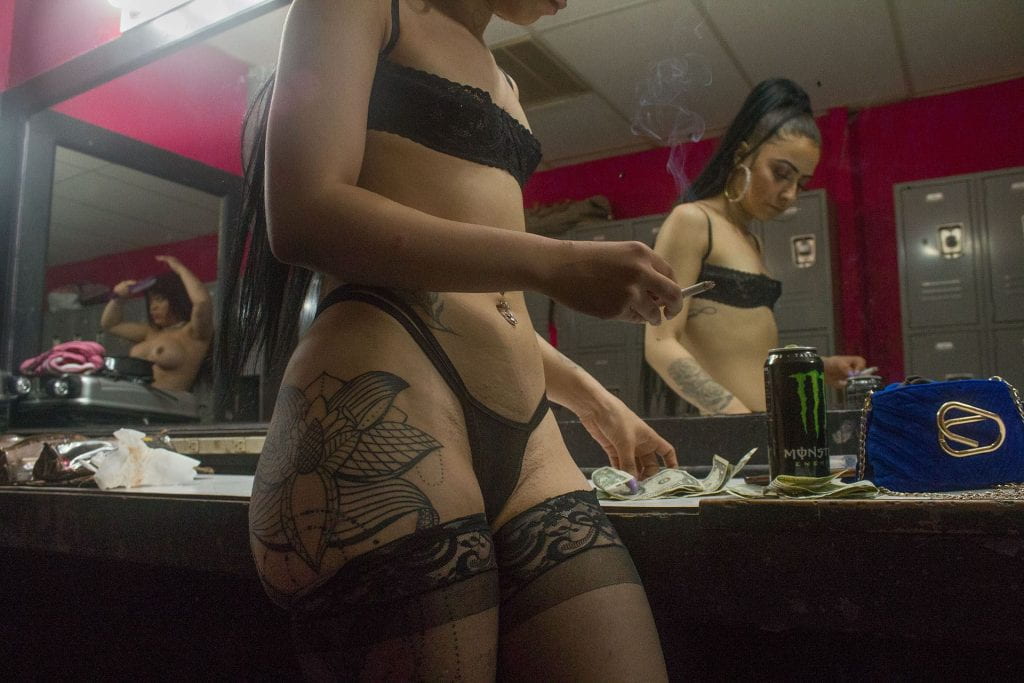
Farrah heads to the locker room after she gets off of stage to smoke a cigarette. Smoking inside the club is allowed, but Farrah says her clothes and work bag always smell like cigarette smoke. Dancers will go through multiple packs a day, each cigarette acting as a small energy boost but also providing stress relief. Unhealthy habits like these are what many strippers resort to, to be able to deal with a job that is high demand in energy and composure.
-

Fresh Out of High School
Farrah works day shift at XTC Cabaret, because she still lives with her father and needs to be home by a reasonable time. Her family is from Iraq, and she is first generation in the U.S. She would have been a freshman in college right now, at age 19, but she says she has other plans that she is moving towards.
-
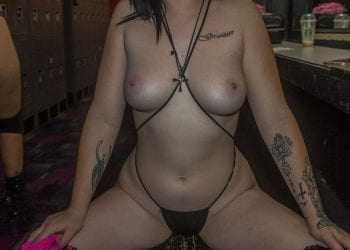
Faith
Presley makes sure to wear her cross necklace every day, and even included it in her tattoos. She was raised under Christian beliefs and continues to practice Christianity. She does not believe that her choice of work creates distance between her and God, as she is not stealing or lying to earn her income.
-
Locker Room Squeeze
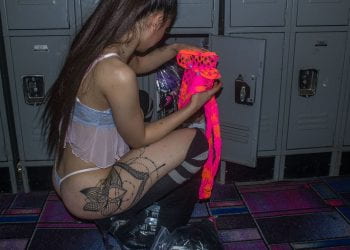
Farrah struggles to fit all of her things in her locker. With over 200 dancers and just one locker room, the lockers are very small and girls often have to use two lockers. Since lockers are an expense instead of an investment, strip clubs will often try to maximize the amount of dancers they can have at one time.
-
Playboy
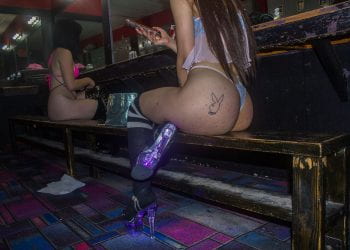
Many young dancers dive headfirst into the lifestyle of adult entertainment. It is easy to find an interest in having a constant sex appeal, since sex appeal is directly correlated with greater earnings in the strip club. The hidden side of this mentality is the psychological issues that full-time objectification of oneself brings upon dancers, especially more inexperienced ones. Eating disorders, depression and body dysmorphia are widespread among girls who make money with their physical appearance.
-

Break Time
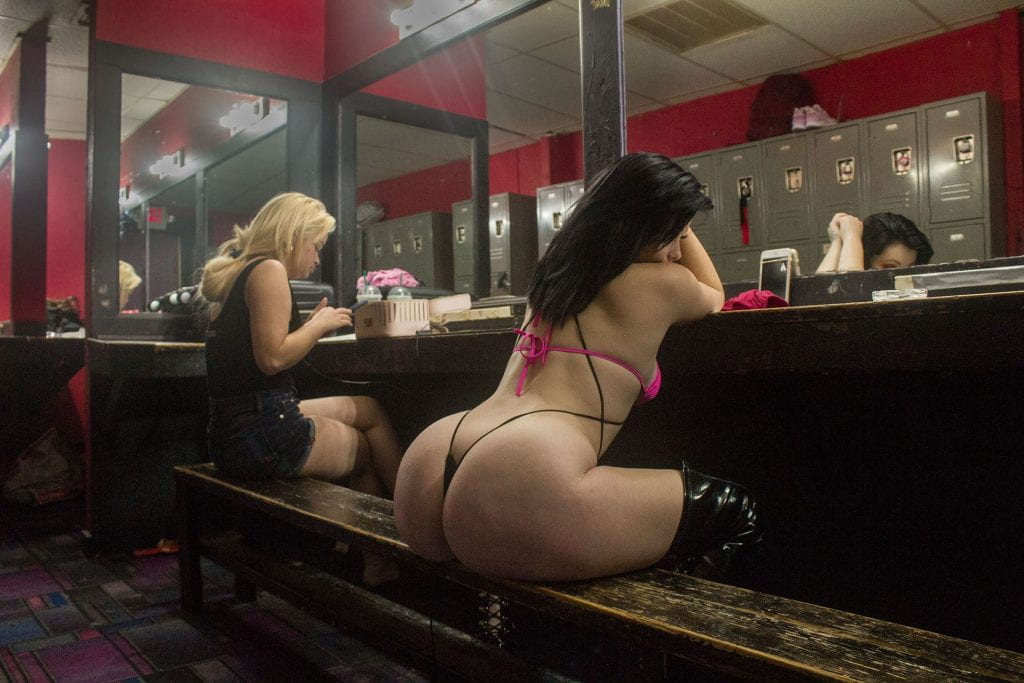
Dancers are legally considered to be independent contractors, which means they have complete control of their schedules. Presley takes a break towards the end of her shift as Carolina is killing time on her phone after just arriving to the club to begin her night shift. Since strippers do not receive an hourly pay, every minute in the locker room is an opportunity cost.
-
Customers calling
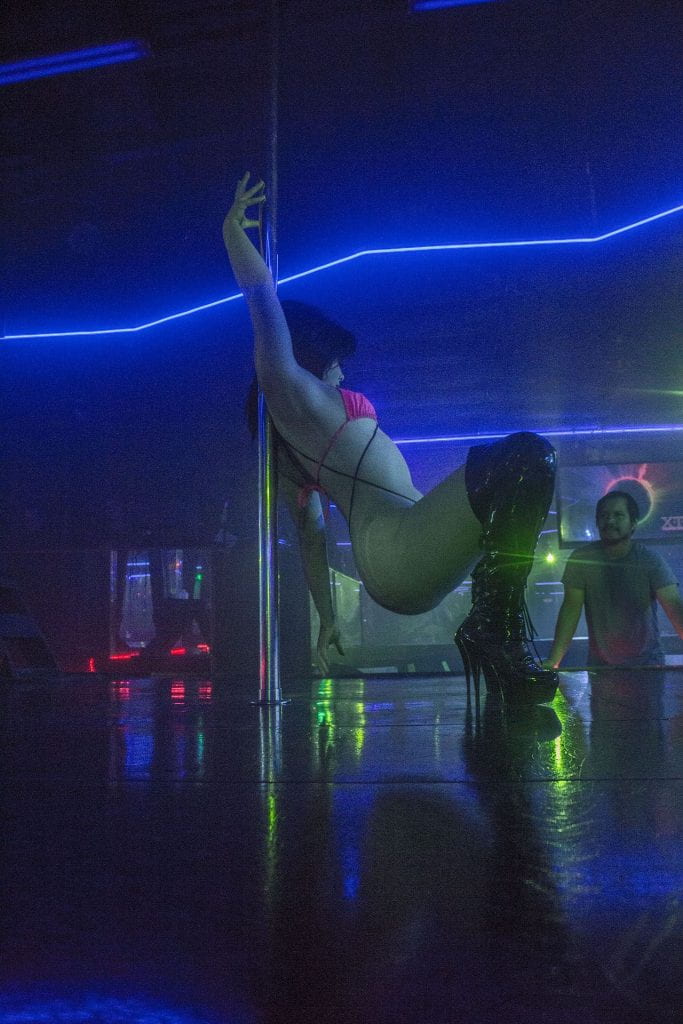
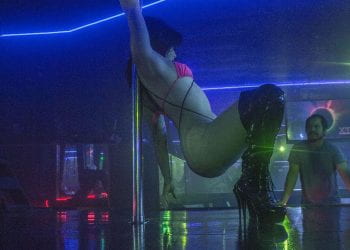
Customers are able to tip the dancer and get some special attention by going up to the stage. They will usually tip dancers that they have a particular interest in, which is often meant as an invitation for the dancer to go to their table once she is off the stage, so they can participate in a larger cash exchange. By performing on stage, dancers can gauge which customers they are most likely to make money off of.
-

Tricks
Society and media have brought the perception of strippers almost on par with that of prostitutes or other sexually deviant women who monetize intimacy. Even though prostitution and other tricks have seeped into the private corners of strip clubs, most strippers focus on seducing men and making money with minimal physical contact. With such a lucrative earning potential, stripping has proven to be what either makes or breaks a woman for the rest of her career.
-
Faux Love
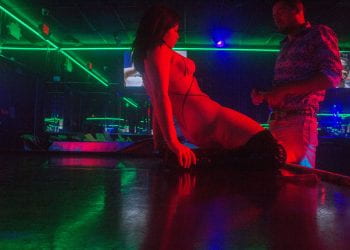
A significant part of a stripper's job is to create an artificial appearance of attraction towards customers. Generally, earnings are higher if the girls pretend to have a personal interest in the customer, but most customers who fall for this do not realize that dancers will talk to 30-50 customers per shift.
-

Cheap
People who have not worked in the sex industry often have negative reactions to female strippers. Strippers will often be described as slutty or cheap. The reality to this concept is that dancers demand money for their services, which they would not be providing otherwise. The exchange between services and money in the strip club is the same as any other service exchange. The societal mindset that has been created which links a woman's inherent value to how liberal she is with her intimacy degrades women who partake in this industry.
-
Practice makes Perfect
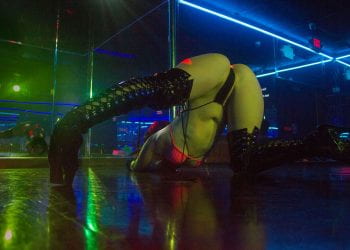
Dancers will spend hours a week practicing their skills on the stage. Dancing in the strip club is an important part of making money, as it is a form of self-advertisement. Over time, strip club dancing has evolved from a type of seductive performance art to a more graphic style of dancing as the interests of men have changed with time and societal norms.
-
Sexy Sells
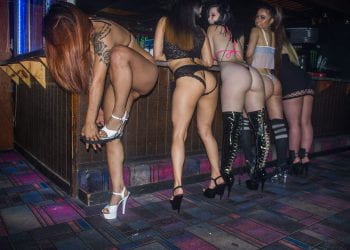
An intense amount of pressure is put on dancers to maintain a put-together look at all times while on the job. Stray hairs, bloated stomachs, undone hair or makeup can cost strippers hundreds of dollars per shift. Part of the high potential earnings of this job come from the cosmetic expenses such as beauty items as well a durable outfits made specifically for dancing. Strippers typically wear about $300 worth of shoes, clothes and beauty supplies while they work.
-

Unfriendly Competition
Friendships in the strip club usually do not last long and often develop into unhealthy relationships. Many feelings of jealousy run throughout every shift as some dancers are rejected by certain customers while others can receive hundreds of dollars from them. Jealousy and possessiveness of customers in the club is related to earnings rather than jealousy of the men. These feelings can all create a very toxic environment for any sort of friendship to grow.