
Kendra Scott is a passionate designer, CEO and philanthropist who believes in the power of giving back, a characteristic evident since the start of her career which began with a hat company dedicated to patients of chemotherapy. With true entrepreneurial spirit, Kendra knew that to be successful would require far more than just hats. It was in 2002 that she launched Kendra Scott Design out of her own home in Austin, Texas with a mere $500. Her creative mind and zest for opportunity led her to design her first-ever jewelry collection accented with natural gemstones. This $500 project is now an empire worth an estimated $1 billion. The Kendra Scott brand is globally loved and recognized and any Kendra Scott design is known for its timeless appearance, unique color and quality materials.
How does one build such an empire? Kendra Scott was featured on NPR’s How I Built This. She talks about growing up around her fashionable aunt and being inspired by her closet. This inspiration is what sparked her to launch her hat company, The Hat Box, at a time when her step father was being treated for cancer. Her dream of hats becoming the newest and hottest trend was overridden by reality. After a few years and the loss of her step father to cancer, Kendra closed The Hat Box and swore she’d never enter retail again.
Kendra married in 2000 and had her first son in  2001. The birth of her son is what encouraged Kendra to get back into the fashion industry however she knew she wanted her next venture to have a mission just as important as The Hat Box. Kendra always had a passion for design and it was when she was pregnant she found the ideal market—although clothes and shoes would fit one day and not the next, jewelry was always there to make her feel beautiful. Delving into this idea, she realized beautiful, semiprecious jewelry was unattainable and too pricey for regular folk. She wanted to change that. After a few basic classes in jewelry design, Kendra designed her first collection with tools given to her by her mother and a few hundred dollars worth of supplies. She promised her husband she’d bring home $1000 from her first collection. She took her son door to door with her as she tried to sell her designs to stores in Austin, Texas.
She made $1200 that day with four orders waiting to be produced.
In no time at all, Kendra Scott Design was a profitable company. Her first big break was worth $74, 000. “Fake it till you make it” was Kendra’s motto during this time; no one knew she was working out of her spare bedroom. After more major sales, Kendra was in New York City trying to attain business in a major NYC showroom. Weeks went by following the pitch and she hadn’t heard a thing. One day she received the call saying the showroom wanted to carry her line. The following market season, Kendra Scott jewelry was being carried in Nordstrom.
6 employees and finally an office space later, Kendra decided (in contrast to her famous last words) that the next step would be to open a retail store. At this time, her marriage had ended and she was a single mother to two sons. The support she received from her family gave her the encouragement she needed
to open a brick and mortar store. Today, with more than 19 boutiques and her line available in over 800 stores, it’s safe to say Kendra Scott was made for retail.
Her philanthropy ties back to her designs. She designs certain lines as a way to give back to society (all of which can be found on her blog). Whether its Habitat for Humanity or Girls on the Run, Kendra always manages to give much greater importance to her work. She is the epitome of a true noteworthy woman.





 Saalumarada Thimmakka was born in a small town of rural India to a very poor family. Never having the opportunity to attend school, Thimmakka was running household chores at an early age and reared her family’s cattle and sheep. She met and married her husband, Sri Bikkala Chikkayya, who was also from poverty. It was not long into their marriage that the pair realized Thimmakka was infertile. The couple suffered from discrimination, stigma and ostracism, as having children in developing countries is considered the most significant role of a woman; the inability to fulfill this role classifies women as “worthless.”
 Thimmakka and her husband decided to plant trees as their children. Together, the couple planted hundreds of trees and cared and nurtured them the same way they would have biological children. What began as a way to deal with the grief of infertility, led to Thimmakka planting as many trees as possible with the encouragement of her husband. The couple, who are avid environmentalists, saw this act of tree planting as a way to serve the environment, country and humanity. And while this commitment to watering and guarding each and every tree did not help them escape the ruins of poverty, it instead led them to become role models to the whole community. Thimmakka’s woodland has almost 300 trees and stretches on both sides of the road for 4km from her village to the next, which is remarkable considering the area’s arid conditions. The couple would have to lug water for several kilometers to ensure all trees were receiving ample amounts. Chikkayya has since passed but Thimmakka continues nurturing the trees and has no intentions of stopping.
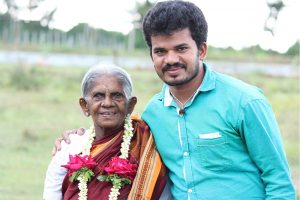 mesh possessed the same love for nature and preservation. He requested adoption from his biological parents and has been following in Thimmakka’s footsteps ever since.
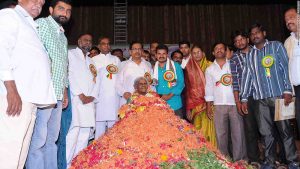 “How we planted and took care of the trees, everyone from children to the elderly should plant and grow trees. It will be beneficial for all of us.” – Thimmakka
Recent Comments